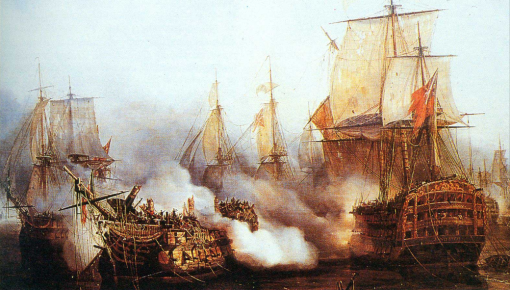
 21 October 1805. Off the coast of Cádiz. The wind sweeps across the Atlantic as dozens of large warships prepare for one of the most decisive naval confrontations in history.
On one side stood the powerful British Royal Navy, commanded by Admiral Horatio Nelson. On the other, a combined French and Spanish fleet under the command of French Admiral Pierre-Charles Villeneuve.
Within hours, the waters off Cape Trafalgar would become the setting for a battle that would forever change the balance of power at sea.
Europe at War
To understand Trafalgar, we must go back to the Napoleonic Wars.
At the beginning of the 19th century, Napoleon Bonaparte dominated much of continental Europe. France sought to consolidate its power while confronting Great Britain, its principal rival.
Control of the sea was fundamental. While France possessed a formidable land army, Great Britain had built one of the most powerful navies in the world.
For Napoleon, gaining temporary control of the English Channel was essential if he was to carry out an invasion of the British Isles.
Spain eventually allied itself with France, and the two powers assembled a significant naval force.
The Fleet That Sailed Towards Trafalgar
In October 1805, the combined Franco-Spanish fleet was stationed in Cádiz.
It consisted of 33 ships of the line: 18 French and 15 Spanish.
Opposing them was a British fleet of 27 ships of the line, commanded by Horatio Nelson.
Nelson was already a legendary figure within the Royal Navy. In previous engagements, he had demonstrated his willingness to take risks and employ unconventional tactics.
His objective was clear: to destroy the enemy fleet.
Nelson’s Strategy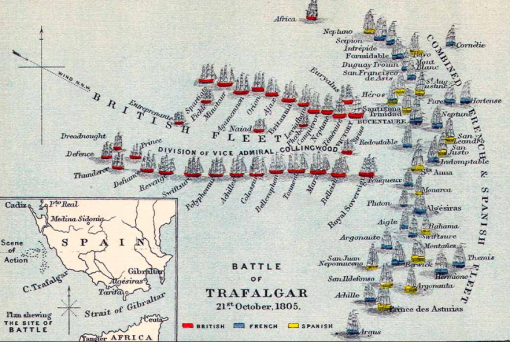
On the morning of 21 October, the two fleets came together off Cape Trafalgar.
The Franco-Spanish fleet was sailing in a long line.
Nelson decided to employ a strategy that broke with traditional naval warfare.
Rather than positioning his ships parallel to the enemy line and engaging them ship by ship, he divided his fleet into two columns that would sail directly towards the enemy formation.
The objective was to break the Franco-Spanish line at several points, isolate groups of ships and attack them with concentrated force.
It was an extremely risky manoeuvre.
The British ships had to sail directly towards the enemy guns for a considerable period of time, exposing themselves to heavy fire before they could reach the French and Spanish line.
But the strategy worked.
 The Beginning of the Battle
At around midday, the engagement began.
The guns of the great warships shook the sea. Clouds of gunpowder smoke gradually covered the battlefield, making visibility increasingly difficult.
The British columns broke through the enemy line, and the Franco-Spanish formation began to fragment.
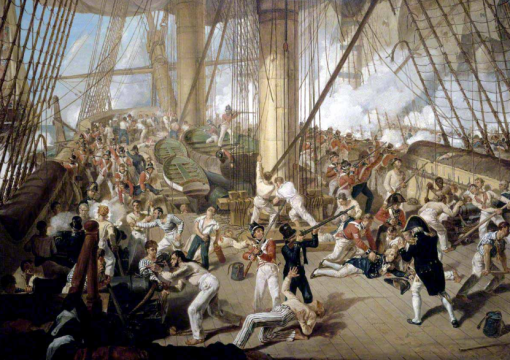
The battle then turned into a series of close-range engagements.
The ships fired their enormous cannons at almost point-blank range, while sailors and soldiers attempted to board enemy vessels.
Trafalgar was neither a clean nor an orderly battle. It was a brutal, chaotic and extremely bloody confrontation.
Nelson and HMS Victory
Aboard HMS Victory, Nelson personally directed the battle.
The Victory became one of the central protagonists of the engagement.
But Nelson would not survive Trafalgar.
During the battle, he was struck by a shot fired by an enemy marksman. Gravely wounded, he died a few hours later.
According to contemporary accounts, before his death he was informed that the British victory was virtually assured.
Nelson would go on to become one of the most celebrated figures in British naval history.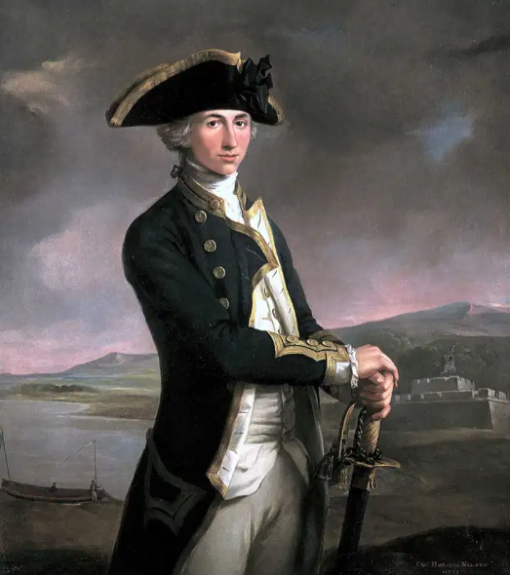
The Spanish Contribution
Trafalgar was also a profoundly Spanish battle.
Fifteen Spanish ships of the line took part in the engagement, including some of the most important vessels of the Spanish Navy.
Spanish sailors fought alongside the French and suffered heavy casualties.
Among the most prominent Spanish commanders was Admiral Federico Gravina, who was seriously wounded during the battle and died several months later as a result of his injuries.
Spain’s participation in Trafalgar remains one of the most significant episodes in the country’s naval history.
A Decisive British Victory
By the end of the battle, the British fleet had achieved a decisive victory.
The British did not lose a single ship, while the combined Franco-Spanish fleet suffered the loss or capture of numerous vessels.
But the significance of Trafalgar went far beyond the outcome of that single day.
The victory secured British naval supremacy for decades and effectively eliminated Napoleon’s ability to carry out an invasion of Great Britain.
British control of the seas would become one of the fundamental elements shaping the international balance of power throughout the 19th century.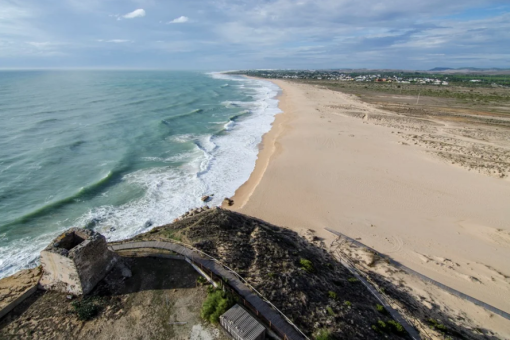
Trafalgar and the Southern Coast of Spain
More than two centuries later, the name of Trafalgar remains closely connected to this coastline.
Cape Trafalgar, located in the province of Cádiz, forms part of a coastline with an extraordinary connection to the maritime history of Europe.
This history extends throughout the wider Campo de Gibraltar, a region whose strategic position between the Mediterranean and the Atlantic has made the sea a central part of its identity for centuries.
Today, not far from this historic setting, lies Sotogrande, where that connection with the sea is experienced in a very different way: sailing, the marina, beaches and a lifestyle closely connected to the Mediterranean.
From the great naval battles of the past to sailing and life by the sea today, this coastline continues to share a unique relationship with the ocean.
Trafalgar changed the course of European history. The sea remains an essential part of the identity of this land.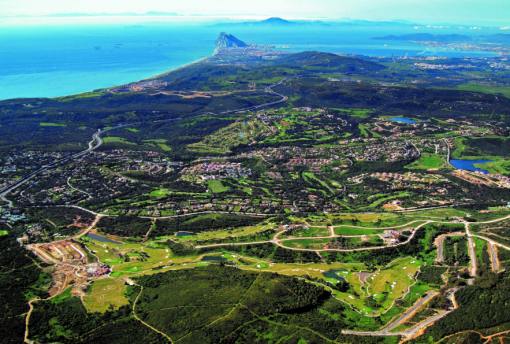
Trafalgar: la batalla naval que cambió el rumbo de Europa
21 de octubre de 1805. Frente a las costas de Cádiz. El viento sopla sobre el Atlántico mientras decenas de grandes navíos de guerra se preparan para uno de los enfrentamientos navales más decisivos de la historia.
A un lado, la poderosa Royal Navy británica, dirigida por el almirante Horatio Nelson. Al otro, una flota combinada formada por barcos franceses y españoles, bajo el mando del almirante francés Pierre-Charles Villeneuve.
En pocas horas, las aguas frente al cabo Trafalgar se convertirían en el escenario de una batalla que cambiaría para siempre el equilibrio de poder en los mares.
Europa en guerra
Para comprender Trafalgar hay que retroceder hasta las guerras napoleónicas.
A comienzos del siglo XIX, Napoleón Bonaparte dominaba buena parte de la Europa continental. Francia buscaba consolidar su poder y, al mismo tiempo, enfrentarse a Gran Bretaña, su principal rival.
El control del mar era fundamental. Mientras Francia contaba con un enorme ejército terrestre, Gran Bretaña había construido una de las armadas más poderosas del mundo.
Para Napoleón, conseguir el dominio temporal del Canal de la Mancha era esencial si quería llevar a cabo una invasión de las islas británicas.
La flota española terminó aliándose con Francia, y ambas potencias reunieron una importante fuerza naval.
La flota que se dirigió hacia Trafalgar
En octubre de 1805, la flota combinada franco-española se encontraba en Cádiz.
Estaba formada por 33 navíos de línea: 18 franceses y 15 españoles.
Frente a ellos se encontraba una flota británica de 27 navíos de línea, bajo el mando de Horatio Nelson.
Nelson era ya una figura legendaria dentro de la Royal Navy. Había demostrado en anteriores enfrentamientos su capacidad para asumir riesgos y utilizar tácticas poco convencionales.
Su objetivo era claro: destruir la flota enemiga.
La estrategia de Nelson
La mañana del 21 de octubre, las dos flotas se encontraron frente al cabo Trafalgar.
La formación franco-española navegaba en una larga línea.
Nelson decidió utilizar una estrategia que rompía con la forma tradicional de combatir.
En lugar de situar sus barcos paralelamente a la línea enemiga y enfrentarse a ella barco por barco, dividió su flota en dos columnas que avanzarían directamente hacia la formación enemiga.
El objetivo era romper la línea franco-española en varios puntos, aislar grupos de barcos y atacarlos de forma concentrada.
Era una maniobra extremadamente arriesgada.
Los barcos británicos tuvieron que navegar durante un tiempo directamente hacia los cañones enemigos, exponiéndose a un intenso fuego antes de poder alcanzar la línea francesa y española.
Pero la estrategia funcionó.
El comienzo de la batalla
Alrededor del mediodía comenzó el enfrentamiento.
Los cañones de los grandes navíos hicieron temblar el mar. El humo de la pólvora cubrió progresivamente el campo de batalla, dificultando la visibilidad.
Las columnas británicas atravesaron la línea enemiga y la formación franco-española comenzó a fragmentarse.
La batalla se convirtió entonces en una sucesión de combates a corta distancia.
Los barcos disparaban sus enormes cañones prácticamente a quemarropa mientras marineros y soldados intentaban abordar las naves enemigas.
Trafalgar no fue una batalla limpia ni ordenada. Fue un combate brutal, caótico y extremadamente sangriento.
Nelson y el Victory
A bordo del HMS Victory, Nelson dirigía personalmente la batalla.
El Victory se convirtió en uno de los protagonistas del enfrentamiento.
Pero Nelson no saldría con vida de Trafalgar.
Durante el combate fue alcanzado por un disparo de un tirador enemigo. Gravemente herido, murió pocas horas después.
Según los relatos de la época, antes de morir recibió la noticia de que la victoria británica estaba prácticamente asegurada.
Nelson se convirtió así en una de las figuras más recordadas de la historia naval británica.
La participación española
Trafalgar también fue una batalla profundamente española.
Quince navíos españoles participaron en el combate, entre ellos algunos de los barcos más importantes de la Armada española.
Los marinos españoles combatieron junto a los franceses y sufrieron numerosas bajas.
Entre los protagonistas españoles destacó el almirante Federico Gravina, que resultó gravemente herido durante la batalla y falleció meses después a consecuencia de sus heridas.
La participación española en Trafalgar forma parte de uno de los episodios más importantes de la historia naval de España.
Una victoria británica decisiva
Al finalizar la batalla, la flota británica había conseguido una victoria contundente.
Los británicos no perdieron ningún navío, mientras que la flota franco-española sufrió la pérdida o captura de numerosos barcos.
Pero Trafalgar tuvo una importancia que fue mucho más allá del resultado de aquel día.
La victoria aseguró durante décadas la supremacía naval británica y eliminó, en la práctica, la posibilidad de que Napoleón pudiera llevar a cabo una invasión de Gran Bretaña.
El dominio británico de los mares se convertiría en uno de los elementos fundamentales del equilibrio de poder internacional durante el siglo XIX.
Trafalgar y la costa del sur de España
Más de dos siglos después, el nombre de Trafalgar continúa unido a esta costa.
El cabo Trafalgar, situado en la provincia de Cádiz, forma parte de un litoral que conserva una extraordinaria relación con la historia marítima de Europa.
Y esta historia se extiende por todo el entorno del Campo de Gibraltar, una zona cuya posición entre el Mediterráneo y el Atlántico ha convertido al mar en protagonista durante siglos.
Hoy, muy cerca de este escenario histórico, encontramos Sotogrande, donde esa relación con el mar se vive de una manera completamente diferente: navegación, puerto deportivo, playas y un estilo de vida ligado al Mediterráneo.
De las grandes batallas navales del pasado a la navegación y la vida junto al mar del presente, esta costa continúa teniendo una relación única con el océano.
Trafalgar cambió la historia de Europa. El mar sigue formando parte de la identidad de esta tierra.