Sotogrande is often associated with championship golf courses, an elegant marina, and an exclusive Mediterranean lifestyle. Yet just beyond its manicured streets and waterfront properties lies one of the most biologically rich and quietly fascinating natural spaces in southern Spain: the Natural Park of Sotogrande and the Guadiaro River Estuary.
Covering approximately 27 hectares, this protected natural area sits along the western bank of the Río Guadiaro, where the river meets the Mediterranean Sea within the boundaries of Sotogrande itself. Despite its relatively small size, the Sotogrande Natural Park plays an outsized role in regional biodiversity, acting as a vital refuge for wildlife and a strategic stopover for migratory birds moving between Europe and Africa.
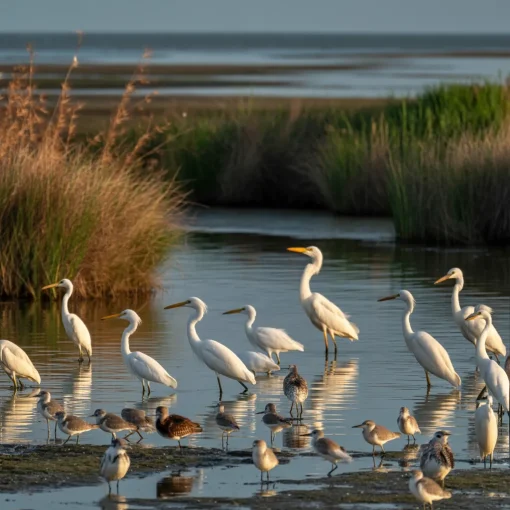
At the heart of the park is a mosaic of habitats that includes a shallow lagoon, extensive reed beds, marshy zones, and a sandy beach. These environments, shaped by brackish water with minimal tidal influence, create ideal conditions for a remarkable variety of bird species. In fact, nearly 230 species have been recorded here over time, making Sotogrande one of the most important birdwatching locations on the Mediterranean coast of Andalusia.
The ecological importance of Sotogrande becomes even clearer when compared to nearby estuaries. Along with the Palmones and Guadarranque rivers, the Guadiaro Estuary forms a trio of wetlands feeding into the broader Bay of Gibraltar region. However, the Guadiaro stands out due to its location directly on the Mediterranean rather than the Atlantic, attracting species that prefer calmer waters and dense reed habitats. For migrating birds traveling along the coastline in spring and autumn, Sotogrande offers a crucial resting and feeding point before the demanding crossing to Africa.
Resident species such as the Kentish Plover, Purple Swamphen, Common Kingfisher, and Cetti’s Warbler rely on the park year-round. Seasonal migrants add even more diversity, with Squacco Herons, Purple Herons, Black-winged Stilts, Audouin’s Gulls, and Great Reed Warblers appearing during key migration periods. In winter, the estuary becomes home to species like Osprey, Water Rail, Penduline Tit, and Reed Bunting, while breeding birds such as the Little Bittern and Reed Warbler use the reed beds as sheltered nesting sites.
Sotogrande’s beach also plays a vital role, particularly for seabirds. During winter and migration seasons, observers may spot Cory’s Shearwater, Balearic Shearwater, or Common Scoter offshore, reinforcing the area’s value beyond freshwater habitats alone.
Recognizing this importance, the Andalusian Government invested nearly 200,000 euros in 1999 to protect and enhance the Sotogrande Natural Park and the Guadiaro Estuary. Fences, gates, elevated boardwalks, and a bird observation hide were installed, alongside a large-scale re-vegetation program designed to restore previously degraded land. Restricting access to raised walkways helped reduce human disturbance while allowing visitors to appreciate the landscape responsibly.
However, nature is not static, and Sotogrande’s coastal setting exposes it to winter storms and erosion. Over the years, repeated damage led to the dismantling of sections of the boardwalk near the beach, and fencing between the lagoon and shoreline was destroyed and never fully replaced. The bird observation hide, once freely accessible, is now usually locked due to past misuse, limiting but not eliminating opportunities for wildlife observation.
Despite these challenges, the Natural Area Estuario del Río Guadiaro remains the primary wetland sanctuary within Sotogrande Costa and is designated as a Special Protection Area for Birds. More than 140 species are consistently recorded today, including herons, flamingos, and osprey, underscoring its continued ecological value.
What makes Sotogrande truly unique is this coexistence of refined urban living and sensitive natural conservation. Few Mediterranean destinations allow residents and visitors to move so easily between luxury marinas and protected wetlands within minutes. As interest in sustainable tourism grows, Sotogrande’s Natural Park offers a powerful example of how biodiversity and human development can coexist—when care, awareness, and long-term planning are placed at the center of the landscape.
*********************************************************************************************************************************
El Paraje Natural Estuario del Río Guadiaro en Sotogrande
Sotogrande suele identificarse con campos de golf de prestigio, un puerto deportivo de primer nivel y un estilo de vida mediterráneo exclusivo. Sin embargo, dentro de este entorno urbano cuidadosamente diseñado se encuentra uno de los espacios naturales más valiosos del sur de España: el Paraje Natural de Sotogrande y el Estuario del Río Guadiaro.
Este espacio protegido ocupa aproximadamente 27 hectáreas a lo largo de la ribera occidental del río Guadiaro, justo donde desemboca en el mar Mediterráneo dentro del propio núcleo de Sotogrande. A pesar de su tamaño reducido, el Paraje Natural de Sotogrande desempeña un papel esencial en la biodiversidad regional, funcionando como refugio de fauna y como punto estratégico para aves migratorias que se desplazan entre Europa y África.
El paisaje del parque está formado por una combinación de laguna, extensos carrizales, zonas pantanosas y playa. Estas condiciones, propias de aguas salobres con escasa influencia mareal, favorecen una extraordinaria riqueza ornitológica. De hecho, se han registrado cerca de 230 especies de aves, lo que convierte a Sotogrande en uno de los enclaves más interesantes para la observación de aves en la costa mediterránea andaluza.
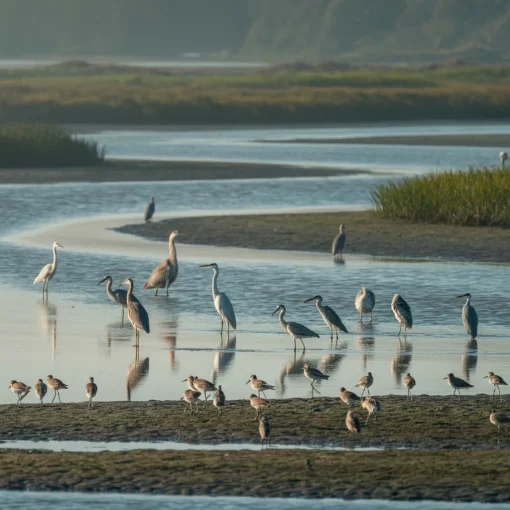
La importancia del estuario del Guadiaro se entiende mejor al compararlo con otros humedales cercanos, como los estuarios de los ríos Palmones y Guadarranque, en la Bahía de Gibraltar. Aunque los tres son relevantes, el estuario de Sotogrande destaca por su carácter mediterráneo, que atrae especies adaptadas a aguas más tranquilas y densos carrizales. Durante las migraciones de primavera y otoño, muchas aves utilizan Sotogrande como área de descanso antes de cruzar el mar hacia África, mientras que otras permanecen aquí durante el invierno.
Entre las especies residentes se encuentran el Chorlitejo Patinegro, la Calamoncilla, el Martín Pescador Común y el Ruiseñor Bastardo. Las especies migratorias incluyen la Garcilla Cangrejera, la Garza Imperial, la Cigüeñuela Común, la Gaviota de Audouin y el Carricerín Tordal. En invierno, el estuario acoge al Águila Pescadora, el Rascón Europeo, el Remiz Pendulino y el Escribano Palustre, mientras que especies reproductoras como el Avetorillo y el Carricero Común encuentran aquí un entorno ideal para anidar.
La playa de Sotogrande también tiene un papel fundamental, especialmente para las aves marinas. Durante el invierno y los periodos migratorios, es posible observar la Pardela Cenicienta, la Pardela Balear o el Negrón Común, lo que amplía el valor ecológico del área más allá del propio estuario.
Conscientes de esta riqueza natural, en 1999 la Junta de Andalucía destinó cerca de 198.000 euros a la mejora y protección del Paraje Natural de Sotogrande y el Estuario del Guadiaro. Se instalaron vallas, pasarelas elevadas, accesos controlados y un observatorio de aves, además de llevarse a cabo un ambicioso programa de revegetación para recuperar zonas degradadas. El objetivo era compatibilizar la conservación con el uso público responsable.
No obstante, la exposición directa al mar ha supuesto un desafío constante. Las tormentas invernales dañaron repetidamente las pasarelas cercanas a la playa, que finalmente fueron retiradas, y parte del vallado desapareció sin ser reemplazado. El observatorio de aves, antes de acceso libre, permanece hoy mayoritariamente cerrado debido a usos indebidos, aunque la observación de fauna sigue siendo posible con paciencia y respeto.
A pesar de estas dificultades, el Área Natural Estuario del Río Guadiaro sigue siendo el principal humedal protegido de Sotogrande Costa y cuenta con la designación de Zona de Especial Protección para las Aves. Actualmente se registran más de 140 especies de forma habitual, entre ellas flamencos, garzas y águilas pescadoras, confirmando su enorme valor ecológico.
Lo que hace realmente singular a Sotogrande es esta convivencia entre desarrollo urbano de alta calidad y conservación ambiental. Son pocos los destinos mediterráneos donde se pueda pasar en minutos de un puerto deportivo de lujo a un humedal protegido de relevancia internacional. En un contexto de creciente interés por el turismo sostenible, el Paraje Natural de Sotogrande se presenta como un ejemplo claro de cómo naturaleza y actividad humana pueden coexistir cuando se prioriza el equilibrio y el respeto por el entorno.